Junior developers are the canary
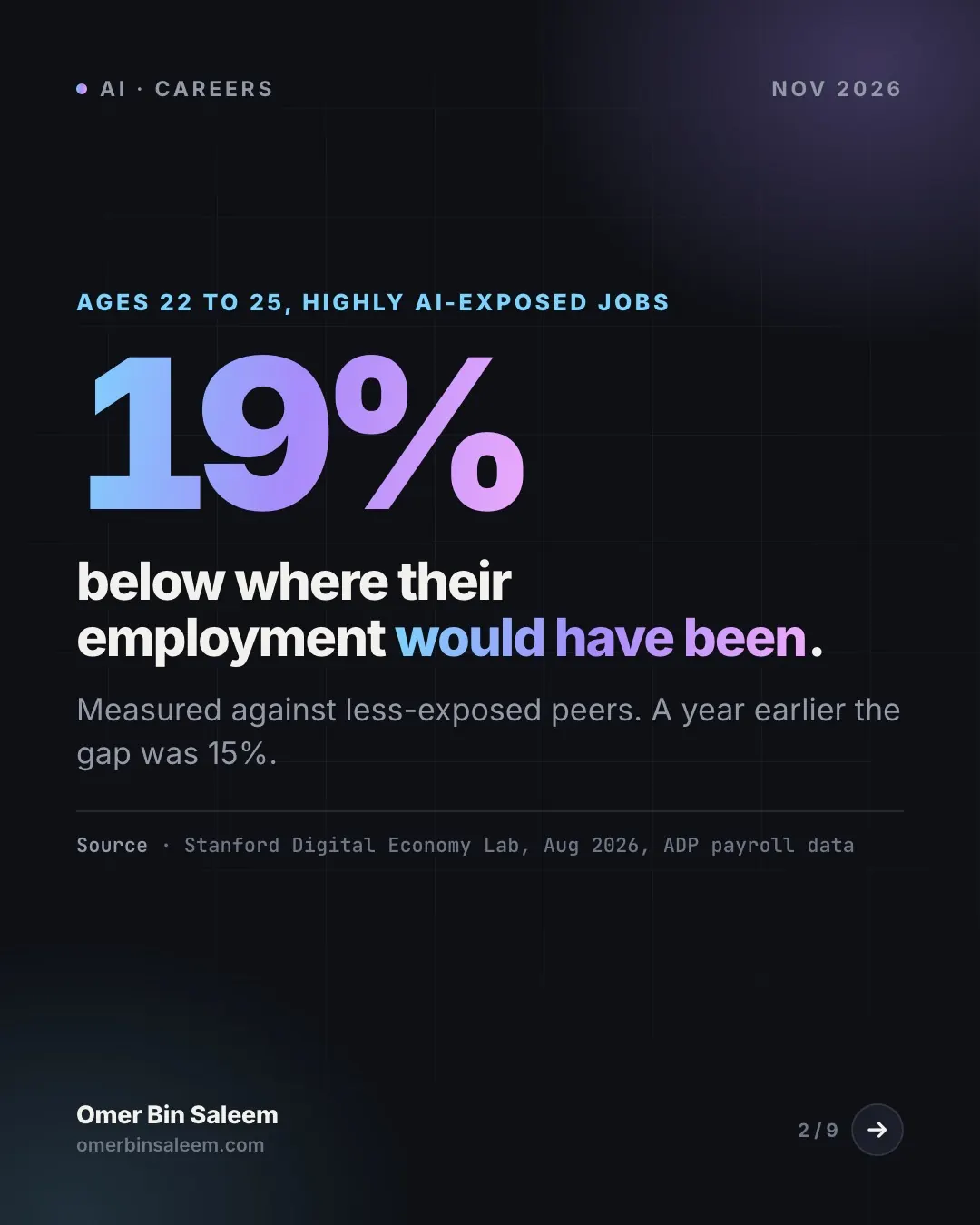
Employment of 22 to 25 year olds in highly AI-exposed jobs is 19% below where it would have been.
The numbers
- Ages 22 to 25, highly AI-exposed jobs19%
below where their employment would have been.
Measured against less-exposed peers. A year earlier the gap was 15%.
Source: Stanford Digital Economy Lab, Aug 2026, ADP payroll data
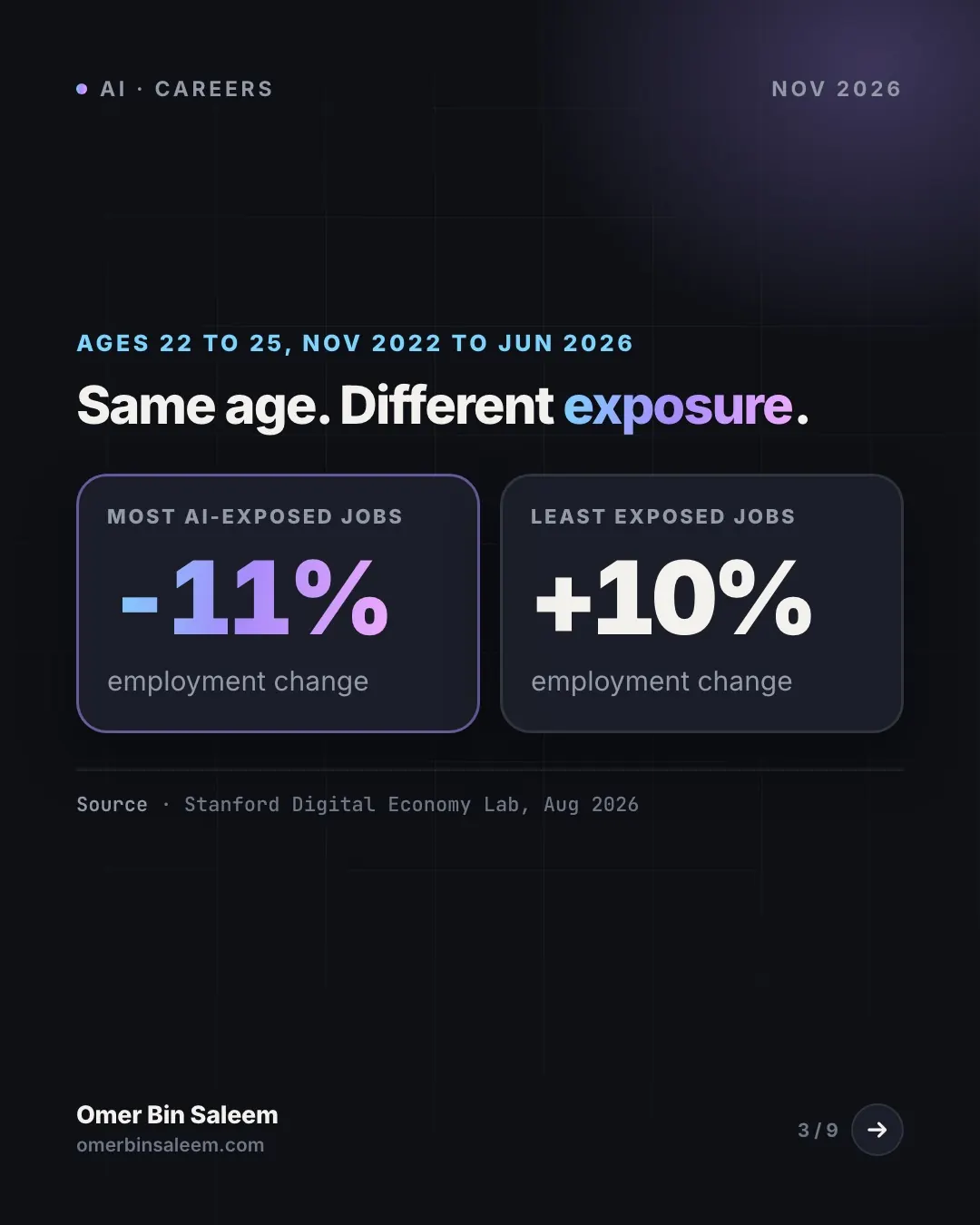
- Ages 22 to 25, Nov 2022 to Jun 2026
Same age. Different exposure.
Most AI-exposed jobs-11%employment changeLeast exposed jobs+10%employment changeSource: Stanford Digital Economy Lab, Aug 2026
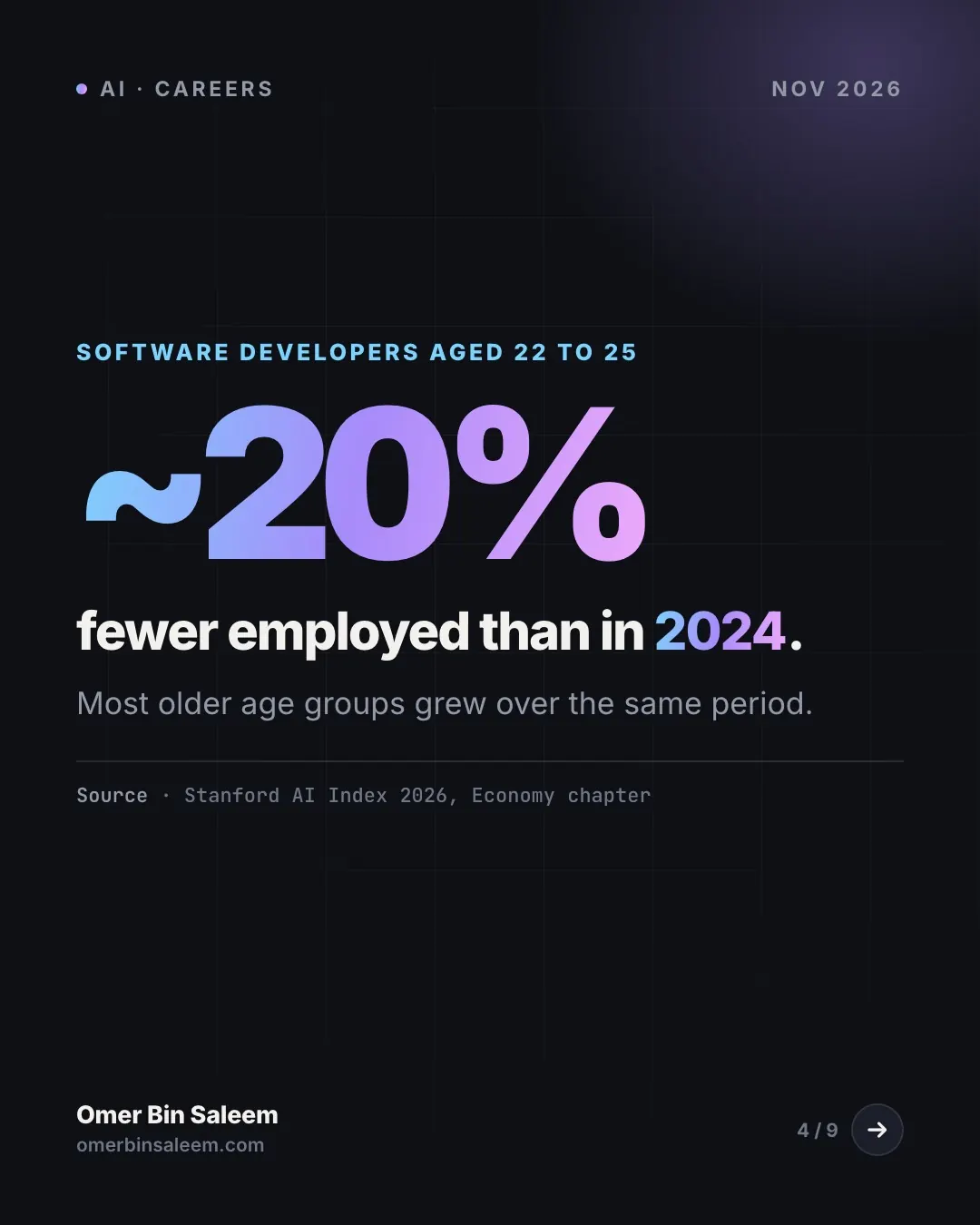
- Software developers aged 22 to 25~20%
fewer employed than in 2024.
Most older age groups grew over the same period.
Source: Stanford AI Index 2026, Economy chapter
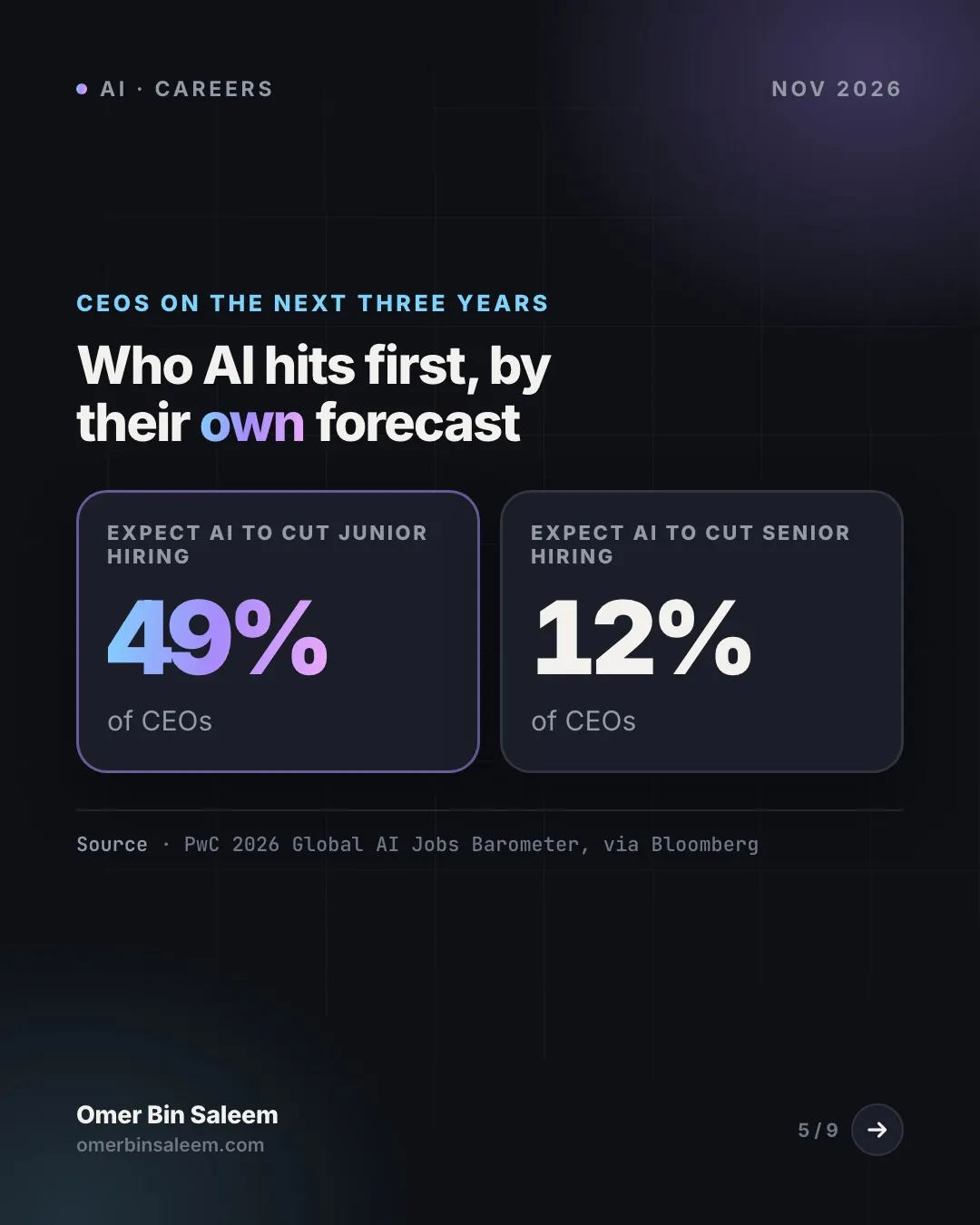
- CEOs on the next three years
Who AI hits first, by their own forecast
Expect AI to cut junior hiring49%of CEOsExpect AI to cut senior hiring12%of CEOsSource: PwC 2026 Global AI Jobs Barometer, via Bloomberg
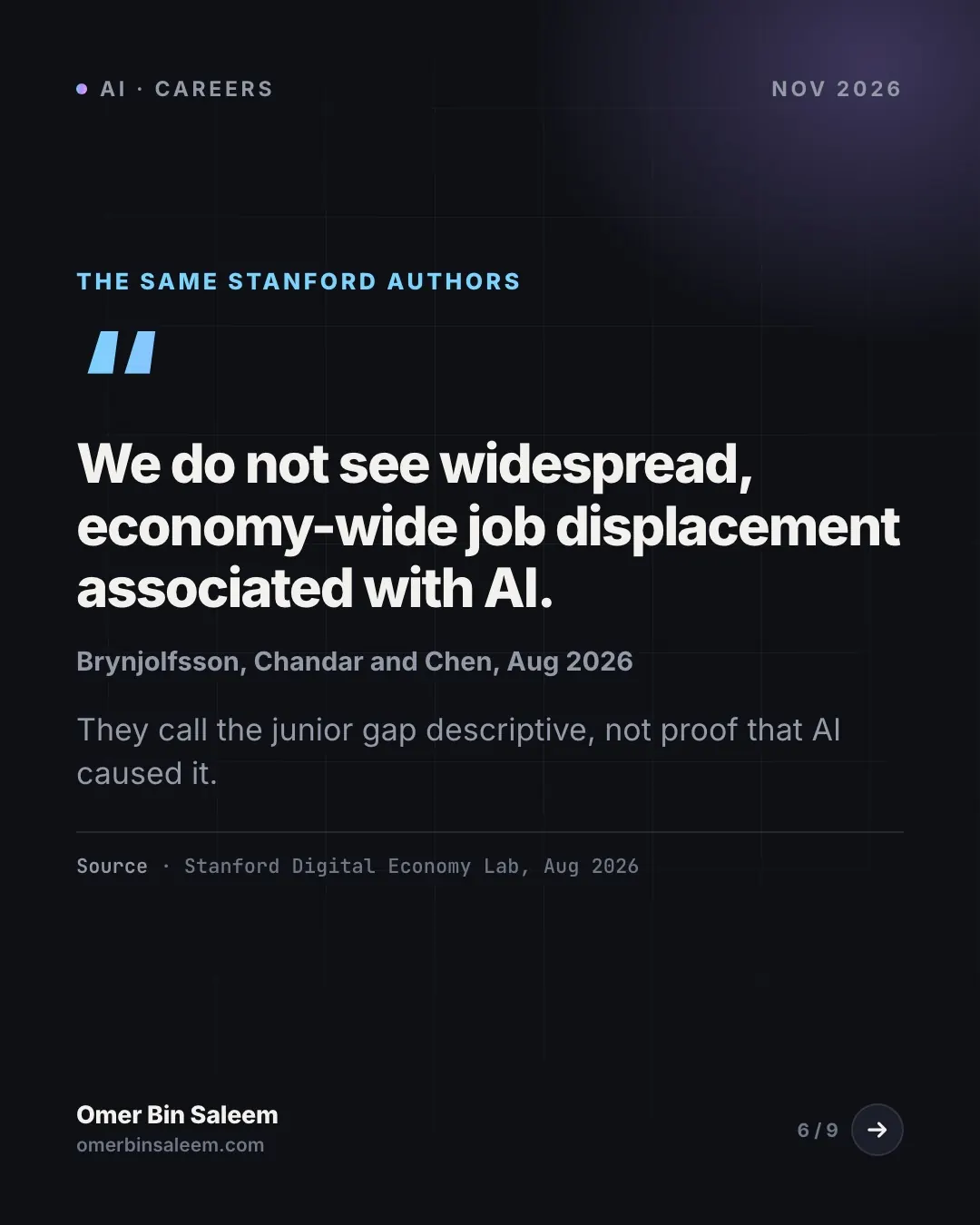
- The same Stanford authors
“We do not see widespread, economy-wide job displacement associated with AI.”Brynjolfsson, Chandar and Chen, Aug 2026
They call the junior gap descriptive, not proof that AI caused it.
Source: Stanford Digital Economy Lab, Aug 2026
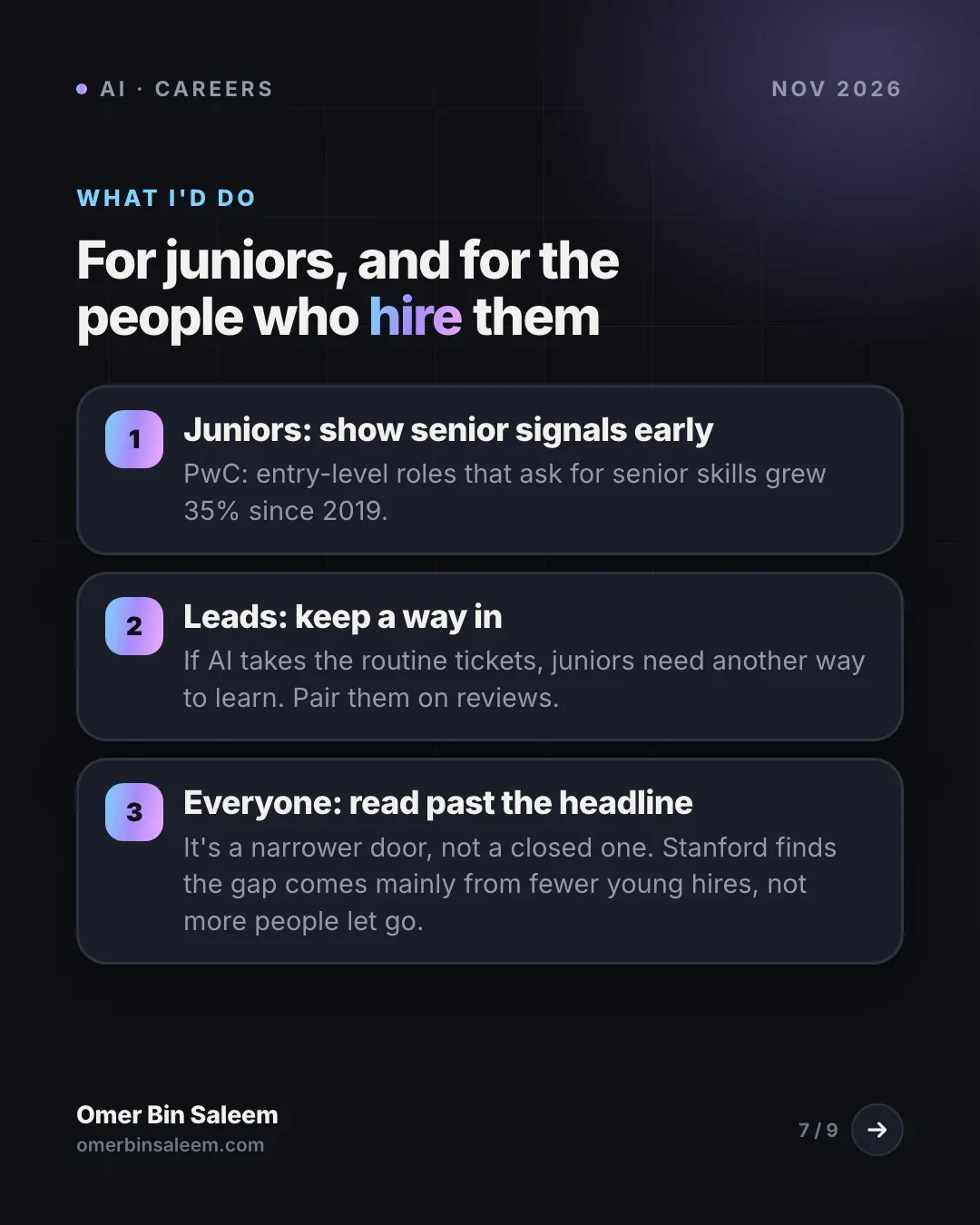
For juniors, and for the people who hire them
- Juniors: show senior signals early. PwC: entry-level roles that ask for senior skills grew 35% since 2019.
- Leads: keep a way in. If AI takes the routine tickets, juniors need another way to learn. Pair them on reviews.
- Everyone: read past the headline. It’s a narrower door, not a closed one. Stanford finds the gap comes mainly from fewer young hires, not more people let go.
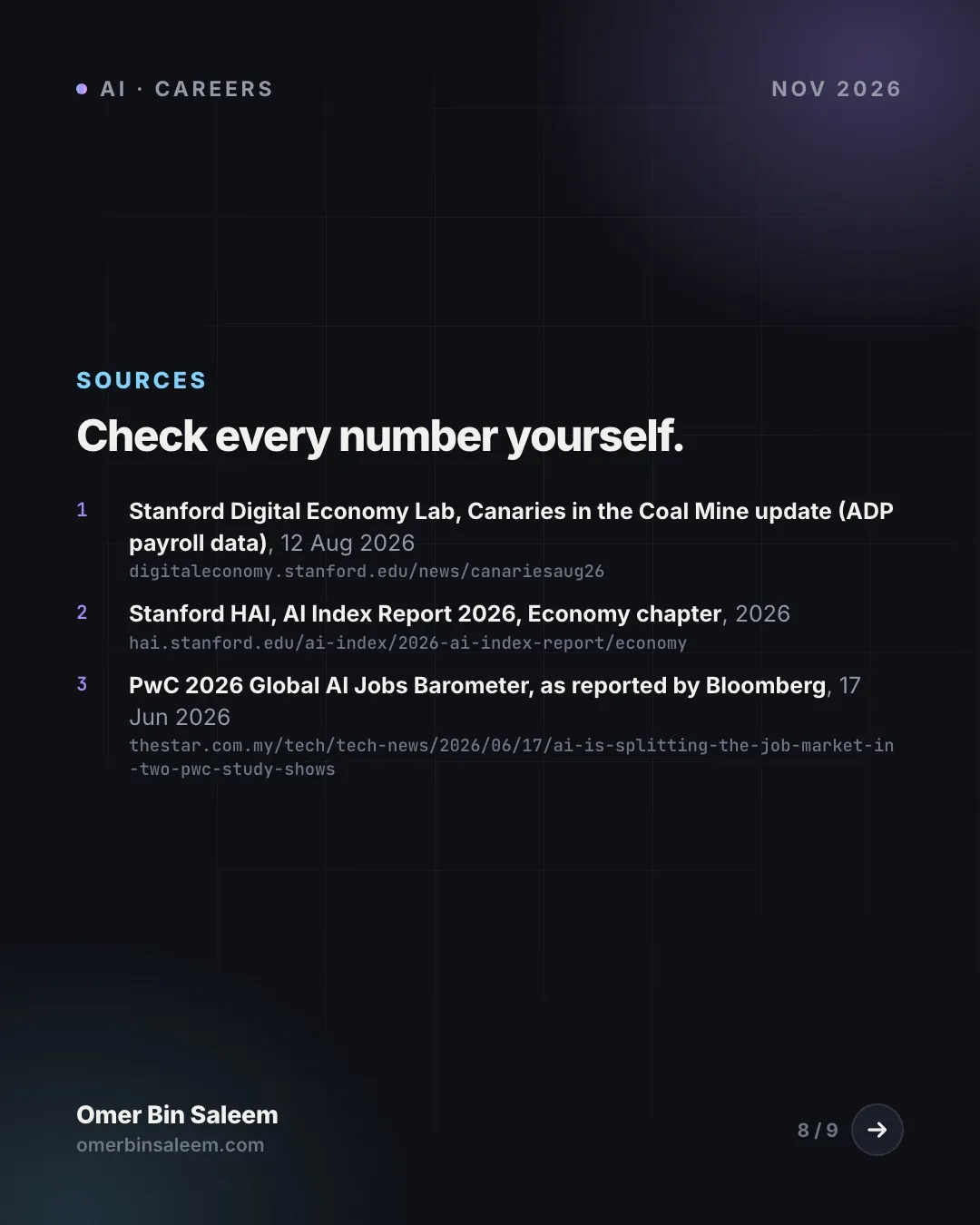
Sources
- Stanford Digital Economy Lab, Canaries in the Coal Mine update (ADP payroll data), 12 Aug 2026
- Stanford HAI, AI Index Report 2026, Economy chapter, 2026
- PwC 2026 Global AI Jobs Barometer, as reported by Bloomberg, 17 Jun 2026
Is your team still hiring juniors? Tell me on LinkedIn or Instagram.